The Machine Is Smart.
Being smart is not the hard part.

Ordinary people are writing down how they work and handing it to a machine. The idea is sixty-four years old, and the biggest funds in the world are arriving at it right now.
The whole AI industry is racing to build a smarter machine.
Bigger models, longer memory, agents hiring other agents, frameworks stacked on frameworks (the kind of thing that needs a team of engineers just to keep it running).
Billions of dollars, one finish line. A machine that thinks better on its own.
The part is the machines we use, the LLMs are already smart. Or at least smart enough. They write the code, draft the contract, build the decks, make the images. For a huge slice of work, it just does it.
So if the machine can already do the work, but we keep falling short of “perfect”, the hard part has to live somewhere else right?
It does, and I found it.
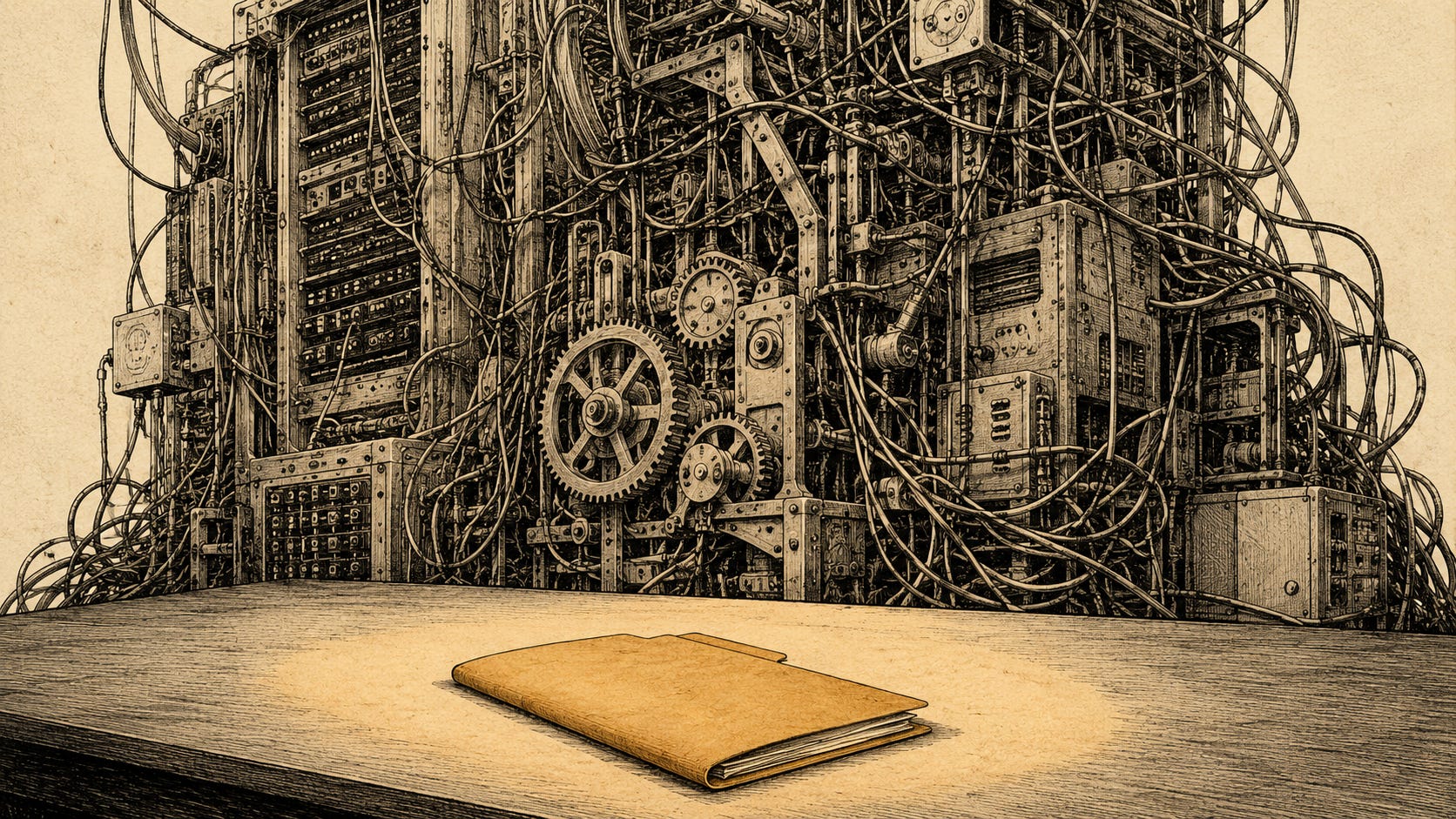
To understand what the first what the hard part is, I have a thought experiment for you.
Imagine for a moment you take Two great programmers and they are trying to build a software to solve the same problem. They both ship software that does the exact same thing. One writes it in one language with one set of choices, the other goes a completely different route, and then they argue for hours about whose version is better (they will, every time).
Both of them are right.
People pay for one or the other based on where they are, what they care about, what they have to maintain, what just feels right.
Nasa needs a software for calculating numbers written in Fortran so they can trust it in space. Facebook may need one written in rust for speed and efficiency. Someone else may write the same program in C because they think its best.
But you see, the concept of “best” changes based on context.
That is the whole game.
Best artist, best lawyer, best programmer, best anything once you get past the simple right-or-wrong stuff. Best becomes relative. It hangs on taste, on context, on the call you make when two good answers are both sitting right in front of you.
So here is the thing about that smart machine. It has read everything ever written about your job but It does not know YOUR version of best. Your CUSTOMERS version of best.
You need to productionize your opinion not just your process.
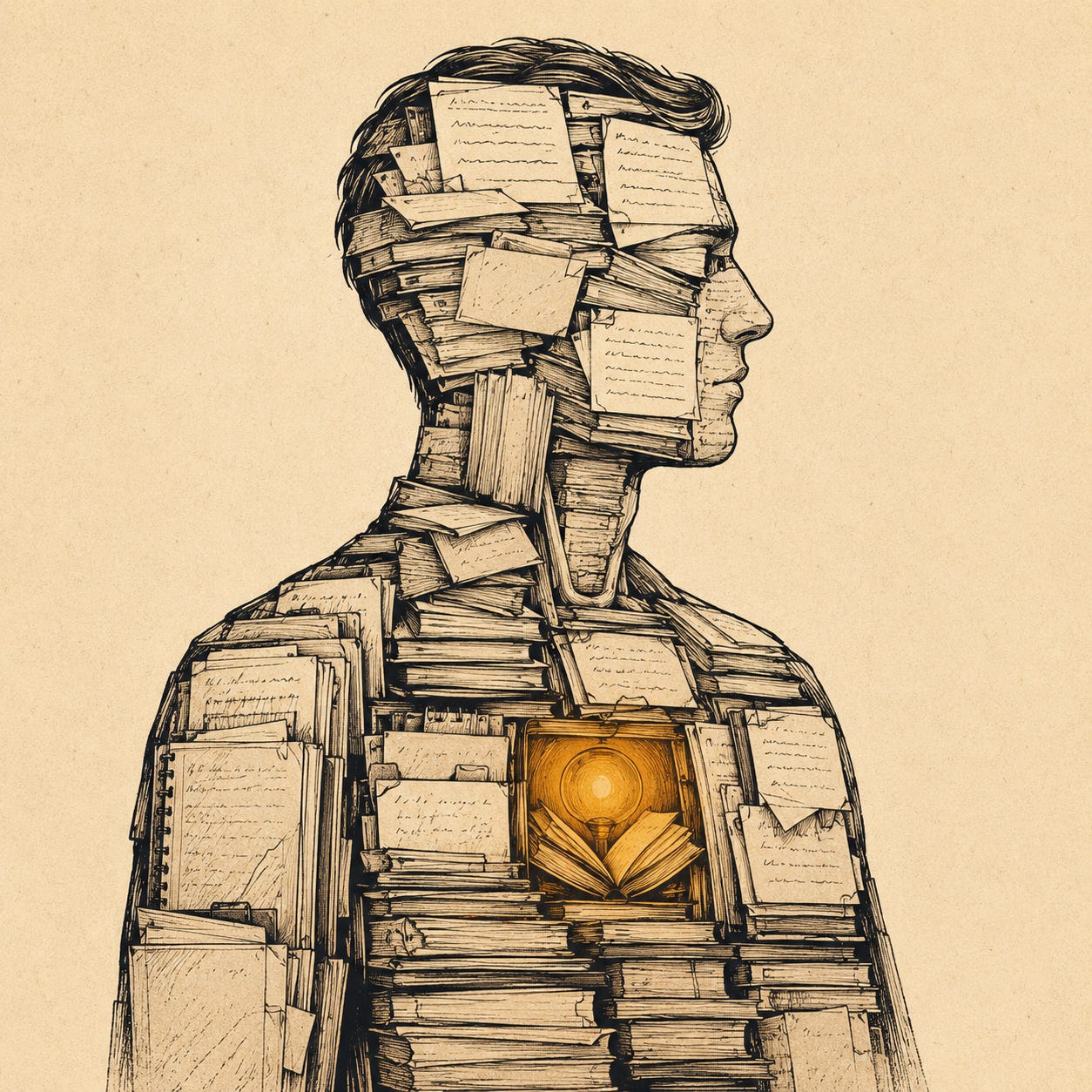
The way you, specifically, make the fuzzy calls. Plain files, the order, the checks, the judgment baked right in. You hand it over, and the machine runs the work the way you would.
That is the whole idea.
And here is the wild part. A man named Douglas Engelbart had most of this figured out in 1962.
He is the guy who invented the mouse (and quite a few useful things) we still use today.
Engelbart wrote a report called Augmenting Human Intellect.
The title is the thesis.
His whole bet was that the way to make a person more capable is to augment them. Give a person better tools, better language, and better ways to organize their thinking, and let those things grow together.
He described the unit he cared about as a trained human together with their artifacts, language, and methods. The human sits at the center. The tools extend the reach.
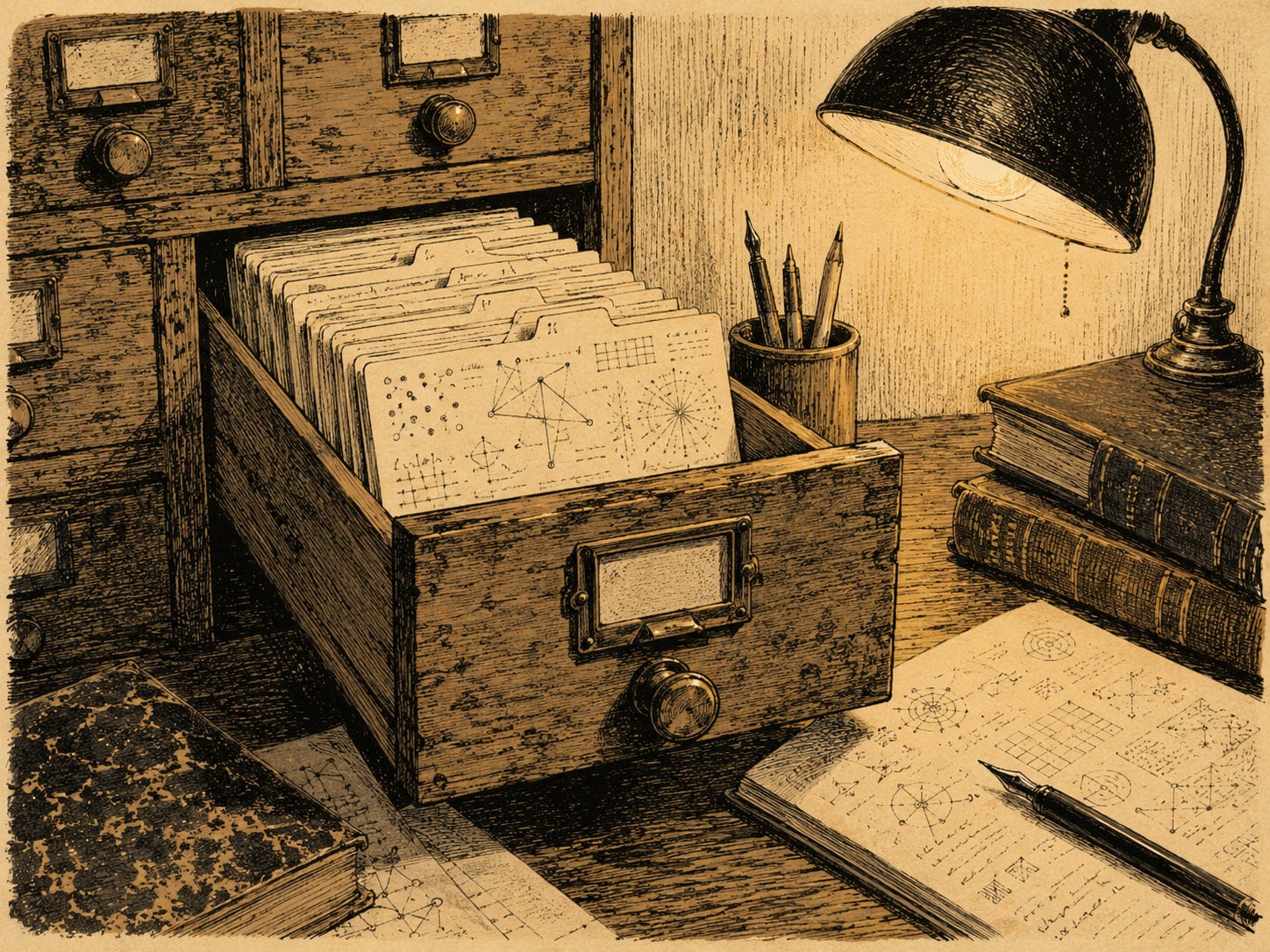
Here is the part I love. Years before he wrote any of that, Engelbart kept a physical box of index cards. He called it his workspace (his word, in 1962). On the cards he wrote down the pieces of how he worked through hard problems, in a structure he could rearrange and follow by hand.
Taking this and the last few years of working with companies in the space of AI, we wanted to build something.
The idea is Engelbart’s, sixty-four years old.
We took his cards, turned them into folders and followed good ole Unix Methodology, and gave them the machine they were waiting for. The folders are the cards. The machine is the thing that can finally read them. (I wrote the whole method up in a paper, if you want the long version. Turns out its really great for agentic context)
Now most people, when you say keep the human in the loop, hear a judgment thing.
The human catches the mistakes. That is true, and it is the small half of it. The bigger half is efficiency, and it is worth slowing down on.
Your brain is absurdly good, and absurdly cheap, at two things the machine struggles with.
The first is holding the whole shape of a thing at once, the big picture, the point of the work. The second is knowing what matters right now, in this exact situation.
You glance at a draft and feel something is off in two seconds. You set the direction in one sentence. The machine, left alone, would burn a fortune in time and effort to reach the same call, if it got there at all.
Engelbart put it plainly. He said that if intelligence depends on any one thing, it is organization. The smarts live in how the parts are arranged.
A man named Ross Ashby, around the same time, called the goal an intelligence amplifier. The aim is to make the person stronger.
So you spend your attention where it pays. Heavy at the start, when you are setting the direction and the taste. Light through the middle, while the machine grinds. Heavy again at the end, when you decide if this is your version of right. A little human judgment at the two ends saves an enormous amount of machine work in between.
Good trade, right?
Now to the part people find hard to believe. Plain files in a sensible order get you most of the way there.
Let me bring it down to earth.
The order of the work is just the order of the folders.
The right information at the right moment is just which folder you are standing in.
The work done so far is just the files sitting there on the page. One AI assistant reads the right file at the right moment, does that one step, then moves to the next. That is it. The structure and content of the folders give the context, and the context naturally “creates” an agent for a workflow.
Computers have run on files in folders for fifty years. We are using the oldest, dullest idea in computing on purpose, because it is the one anybody can read and anybody can change, but more importantly, its the idea that has lasted through all the major technology shifts.
There are limits I’m not selling you the snake oil, end all be all solution; I am hard on a lot of agentic stuff in public and I want to be fair here.
There are real jobs that do need the heavy machinery and coding infrastructure. The only reasons the folder system I built in my research paper works well is because of some of that infrastructure.
Reading and writing files, tool call, things happening in real time, thousands of things at once, work that has to branch and re-route on its own without a person looking.
Those cases are real and do require some decent infrastrcutre, and I will name them every time.
However that infrastructure has already been built…
And for the kind of work most people do, nine times out of ten, plain files win over MORE infrastructre.
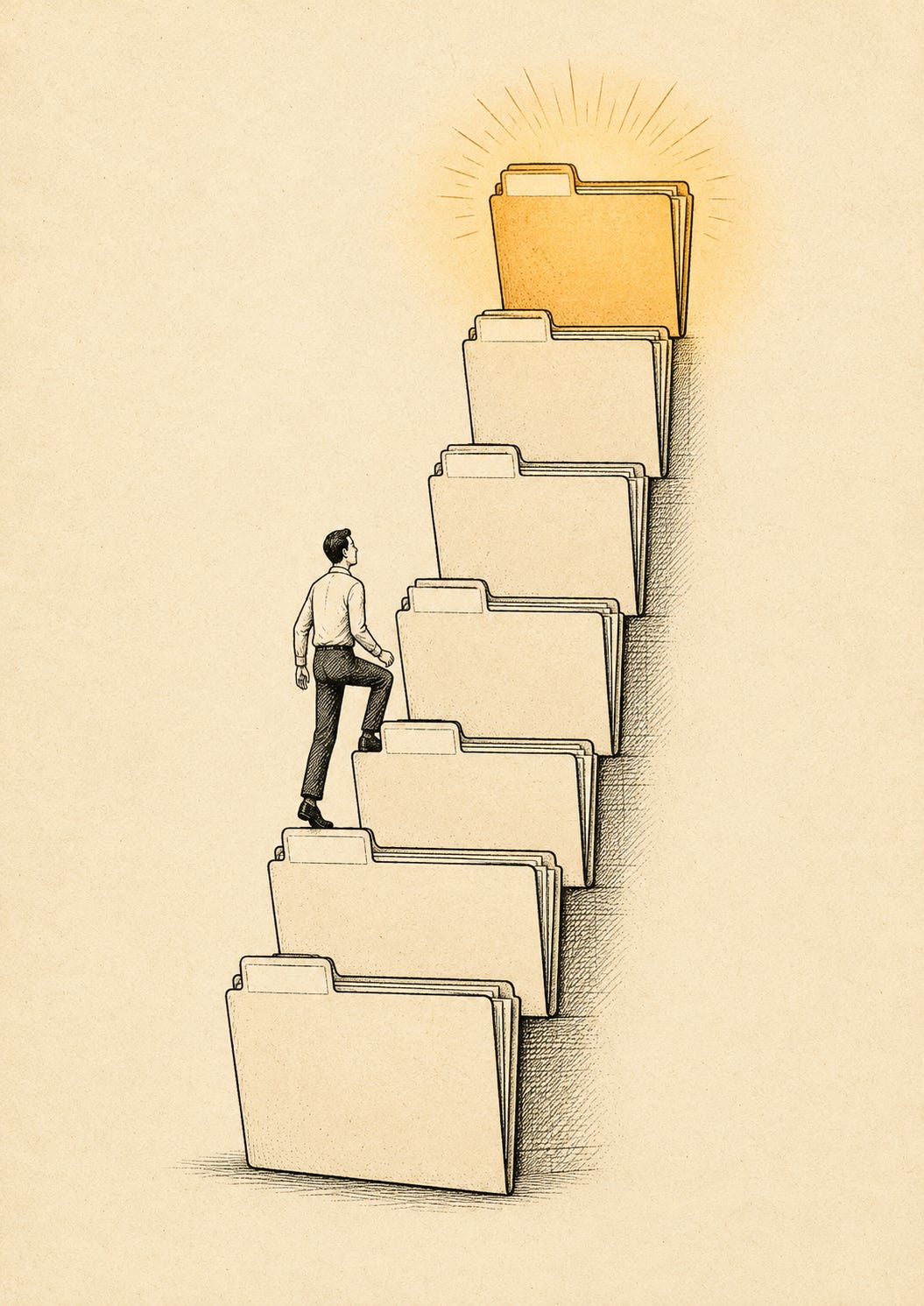
Now getting the most out of these systems is really about climbing the ladder of abstraction around software.
We have been climbing this ladder for seventy years.
At the bottom is the machine, ones and zeros, the only thing the hardware understands. Nobody wants to write in that.
So we built the compiler, a program whose whole job is to take something closer to human language and turn it into the ones and zeros the machine runs on. That one move freed people to think about the problem while the compiler handled the machine.
Then came the high-level languages, C, then Python, each one letting you say more with less and forget another layer below you.
A single line of Python today stands on thousands of lines of machine code you will never see, and never need to.
I have a lovely, animated video diving deeper into this if you are interested!
Every rung pulled the same trick.
It hid the layer underneath, so you could think in your own terms and let the machine handle the rest. AI is just the next rung up. You describe the work in plain words, and the machine carries it all the way down.
If this “abstraction” feels far away for you, it is closer than you think, because you have already started climbing the ladder.
Level one is where almost everyone is.
You chat with the AI, you copy and paste, you do it again next time.
Level two is when you get tired of retyping and you start saving your good prompts.
That is already a step up, you are standing on the last version of yourself.
Level three is when you take those saved pieces, put them in folders or data structures in order, and let one assistant walk the whole thing becoming the agent you need when you need it based on the information it is navigating.
Now it runs the whole job, start to finish and the best part is you can use ANY AI you are not stuck with one or another.
Each level is the level below it, made easy enough that you can stand on top of it and reach higher.
That is the part Engelbart saw too. You use the tools to build better tools, and the better tools let you build better ones again. And because the improvement happens at the level of how you work, it spreads.
Fix the shape once, and every job that runs on that shape gets better at the same time
Here is where it gets exciting, and where the money is.
Once your taste and your checks are written down, that file is a version of you. It makes your calls when you are not in the room. You can hand it to your team and your way of working spreads to all of them.
You can rent it out to a company that wants your judgment running inside their walls. This is what I mean by software in a service.
You are selling the way you do the work, with the tool tucked inside it, and you still own the thing you wrote.
And it gets better when a lot of people do it at once.
Engelbart made a bold claim in 1962 that almost nobody has tested.
He said three augmented people working together are far more than three times as strong as one, and something like ten times as strong as three people with no augmentation at all.
The whole becomes much bigger than the sum.
We have a community of more than 37,000 people building these packages, sharing them, learning from each other every week. Hundreds of agencies in there now build this way as their business. This is not a someday idea. People are making a living at it right now, and that community is the first real test of a sixty-four-year-old bet. So far it is holding.
And here is the part that told me we were not imagining it.
This year, three of the biggest investment firms in the world each wrote a version of the same essay, in their own words, without comparing notes.
Sequoia said the next great company sells the finished work itself, and gets paid the way you pay a person.
Foundation Capital put a number on it, four point six trillion dollars, because the world spends far more on people doing work than on software, and they argue the lasting advantage is owning the record of how the work gets made.
a16z said the companies that survive the next wave will own two things, a private store of information nobody else has, and a network of people around it. When people who cannot see each other’s work all draw the same map, the map is probably real.
I would add one layer on top of all of it.
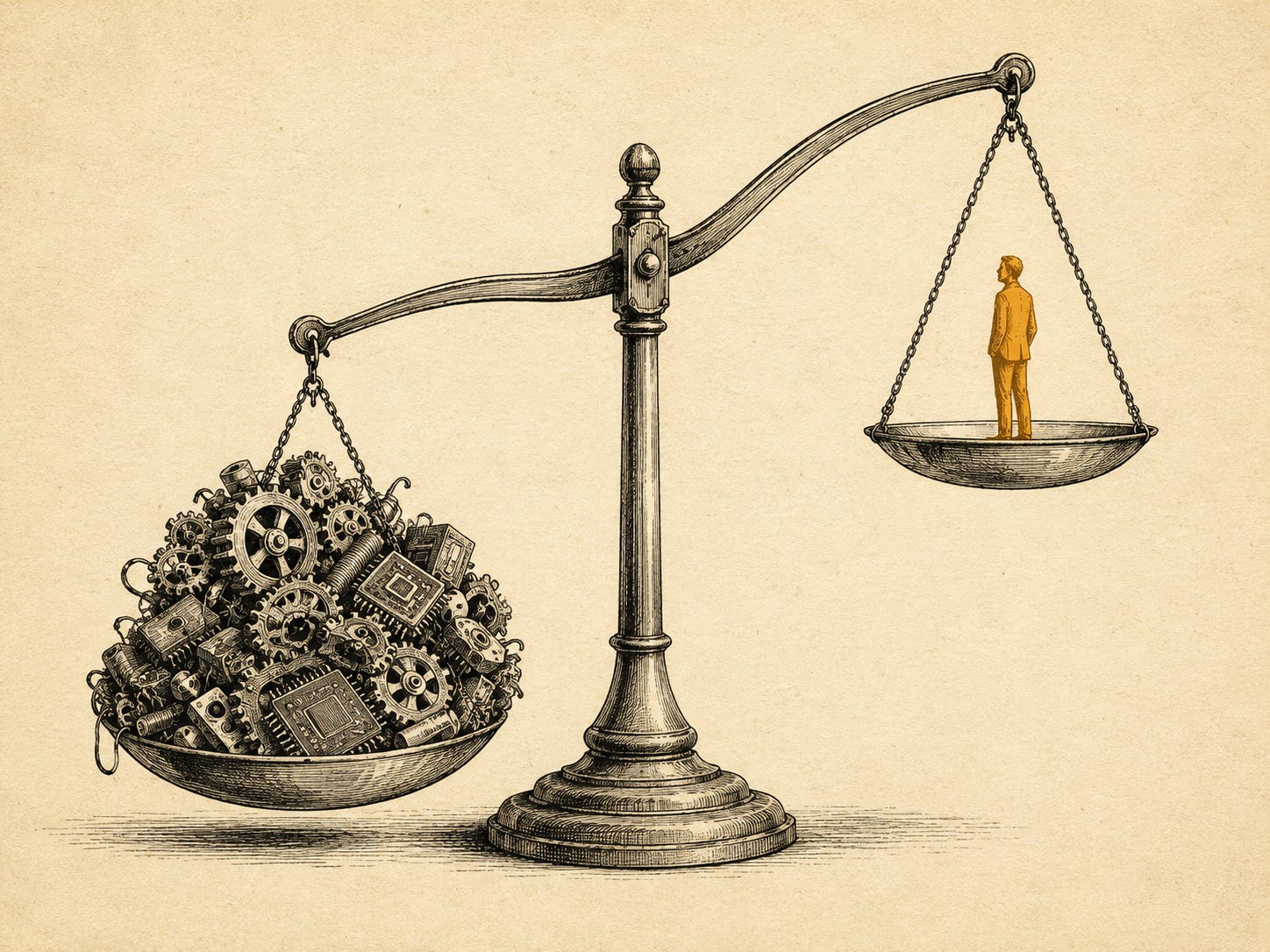
The biggest company here will be a platform, the place where a million people write down their own way of working and rent it out, each their own version of best.
We are building that place from the supply side, and the supply already showed up.
So let me tell you the bet I am making, plainly, so you can decide if you agree.
Building is getting cheap.
The model writes the code and drafts the work for almost nothing.
So the scarce thing, the thing that holds its value, becomes the people who know how good work gets done, and the place that holds their judgment and puts it to work (both not one or the other).
The whole piece rests on one assumption, and I will say it out loud:
the shape of how you do your job is already there, sitting inside the way you explain it. You just never wrote it down. I think that is true. Sixty-four years of this idea, and the 37,000 people already doing it in my community, are my evidence.
Engelbart noticed something near the end of his report that still stings.
We pour money, year after year, into making the machines better. We spend almost nothing on the human side of the system, the part that decides what the machines are even for.
Sixty-four years later that gap is wider than ever. Writing down your version of best is a small correction to it. It puts the human back at the center, where the value was the whole time.
So write down how you work. That is the whole trick. The machine is finally smart enough to read it,
and for the first time,
your version of best is worth something you can hold.
Till next time friends…Happy Learning.
You need to productionize your opinion not just your process. 💪 I have been bringing this concept to work with me. Industries need to focus on this layer more to obtain the outcome they truly want. Thank you for this article, I will be reading it over for some time to come.
One of my favorite things to do when it comes to AI is taking research papers like the Interpret-able Context Methodology: Folder Structure as Agent Architecture and comparing them to a similar system that I have in my AI garden/lab. I have built an AI named Indexia ⊡ thats entire purpose is to take large messy drives with full of random files, read each one of them, split them into categories to allow for future AI systems to read more easily. Now that paper does have some features in there that can improve my system! So adopting that feature like Pulling the classifier's vocabulary out of Python into a markdown file can be implemented based on the description of that paper. It’s one of my favorite things to do with AI that helps massively when improving my systems.
🜸